What Are Digital Scans and Traditional Molds?
Digital scanning vs. traditional molds comes down to one difference in method: a digital scan uses a handheld wand to build a 3D model of your teeth in minutes, while a traditional mold uses soft putty in a tray that sets against your teeth to create a physical replica. Both record the same information, the exact position of your teeth and bite.
So the real question at your appointment comes down to which tool your orthodontist reaches for, and why.
Here’s how each one works at a basic level:
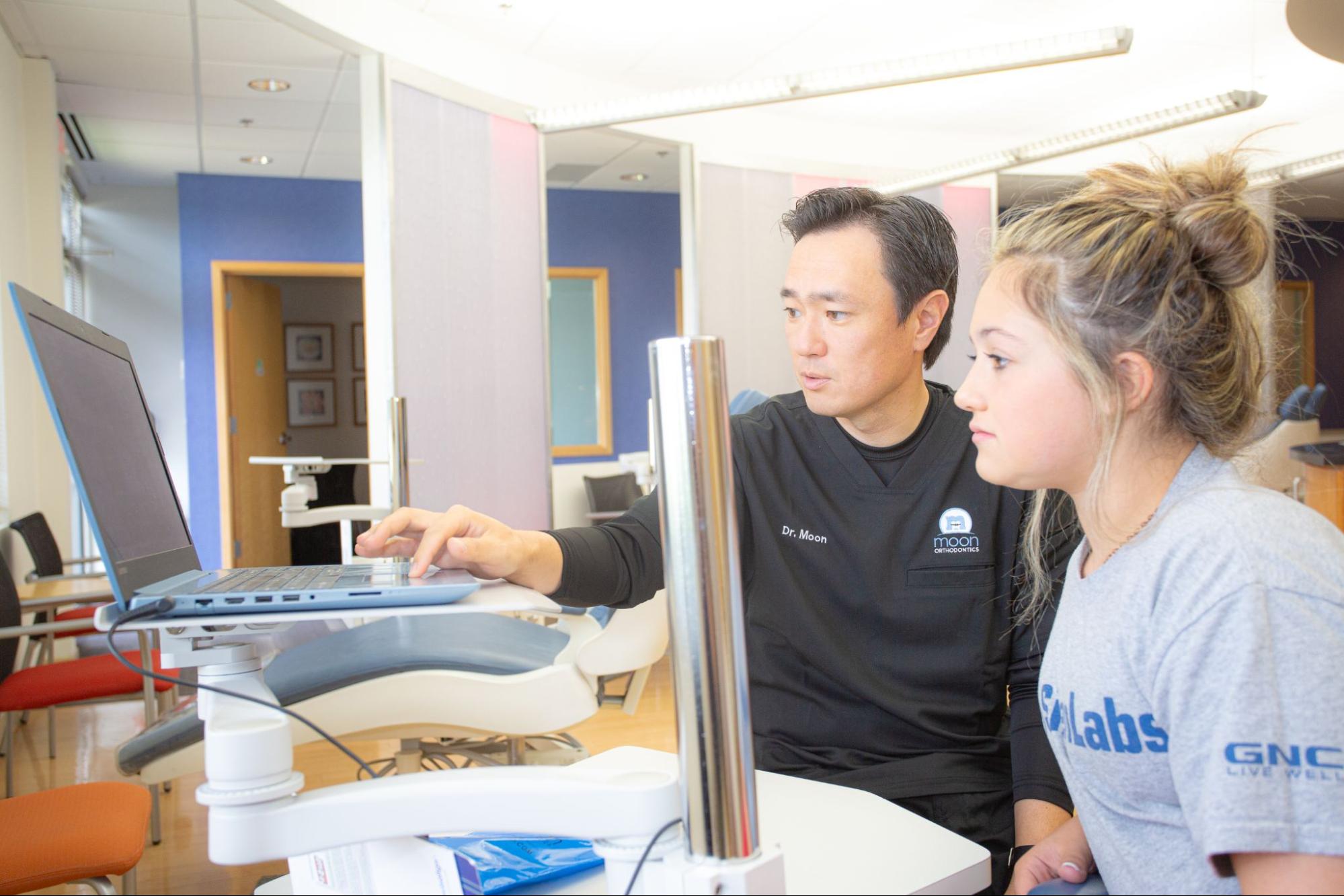
- Digital scan. A slim wand about the size of an electric toothbrush glides over your teeth and gums. It stitches together thousands of images into a full-color 3D model you can watch appear on a screen. Nothing sets, nothing hardens, and nothing sits in your mouth waiting.
- Traditional mold. A tray filled with alginate or PVS putty is seated over your upper or lower teeth. The material firms up in a couple of minutes, then lifts away carrying a negative copy of your bite. A lab pours plaster into that copy to make a physical model.
Both are still in use today, and neither one is outdated. The method depends on the appliance being made, the lab’s requirements, and what’s most comfortable for you. At Moon Orthodontics, the no-goop digital scan handles the vast majority of cases, from clear aligners to retainer remakes.
They both get you to the same place. One just happens to be a lot smoother for most people.
How Each Process Works at Your Appointment
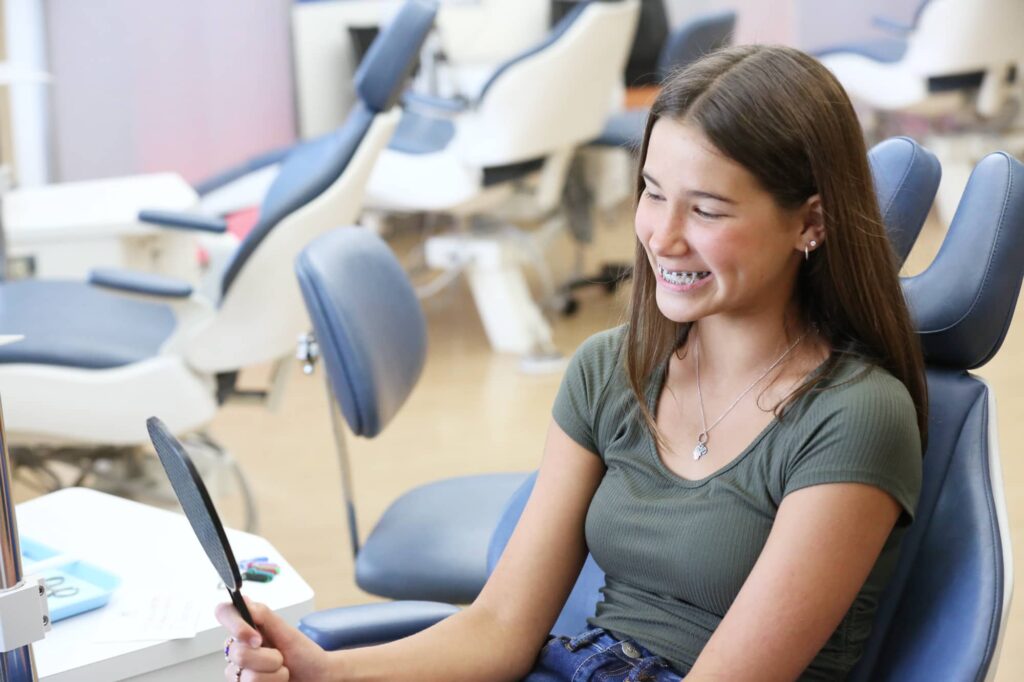
Here’s the short version: a digital scan at your appointment takes about three to five minutes per arch. Your assistant places a small cheek retractor, then glides the wand over your upper teeth, your lower teeth, and your bite while a 3D model builds on the screen beside you. Nothing hardens, and nothing has to set.
Traditional molds run on a different clock. Each arch needs roughly one to three minutes of set time, and there’s tray sizing and material mixing before that. Neither timeline is long, but one of them asks you to hold still and wait.
How Does a Digital Scan Work, Step by Step?
- A soft cheek retractor gently holds your lips out of the way.
- Your assistant glides the wand slowly over your upper arch, capturing the chewing surfaces first, then the inside and outside of each tooth.
- That same pass repeats on your lower arch.
- You bite together, and the wand records how your upper and lower teeth meet.
- Your finished 3D model appears on the monitor, usually before you’ve finished settling into the chair.
You can watch the whole thing happen in real time. Most patients end up more interested in the screen than in what’s going on in their mouth.
How Does a Traditional Mold Work, Step by Step?
- Your assistant sizes a tray to fit your arch.
- Impression material gets mixed by hand and loaded into the tray.
- That tray is seated over your teeth and held steady while the material sets.
- Once set time is up, the tray lifts out in one piece.
- Your impression is then disinfected, packaged, and sent to the lab for pouring.
What If You Have a Sensitive Gag Reflex?
Molds are the part of records that make people nervous. These help:
- Breathe steadily through your nose, not your mouth.
- Sit upright and lean slightly forward instead of reclining.
- A pinch of salt on the tip of the tongue can quiet the reflex for some people.
- Take a break between the upper and lower arches instead of powering through.
- Speak up. Your assistant would much rather pause than push.
Either method usually pairs with digital photos and a digital X-ray. Together, those three pieces make up your orthodontic records, and they’re what Dr. Moon uses to build your customized treatment plan.
Benefits Patients Notice with Digital Scanning
The advantages of a no-goop digital scan show up immediately, not just on paper:
- No putty, no tray pressure. Nothing fills your mouth, so there’s far less gagging and far less of that “hold still and wait” feeling.
- You see your own teeth in 3D. Crowding, uneven wear, and bite issues become obvious on a screen in a way they never are in a mirror. It’s easier to understand your options when you can see what Dr. Moon sees.
- Same-day transmission. Digital files go straight to the lab electronically. There’s no plaster to pour, no box to ship, and no courier delay.
- Spot corrections instead of do-overs. If one area needs a better capture, the assistant re-scans that section in seconds. No starting from scratch.
- Files stay on record. Your scan is stored digitally, which makes retainer remakes and progress comparisons much simpler down the road.
- Works around hardware. Brackets, wires, crowns, and implants don’t block a scanner the way putty can grip and pull.
For anyone who’s ever white-knuckled the armrest through an impression, this is the part that matters most. A scan is touch-free apart from the retractor, and you can pause any time.
Digital Scanning vs. Traditional Molds: Side-by-Side Comparison
| Factor | Digital Scan | Traditional Mold |
|---|---|---|
| Comfort | Touch-free wand, no material in the mouth | Tray pressure, putty taste, gag reflex common |
| Time per arch | About 3 to 5 minutes | 1 to 3 minutes of set time, plus tray prep |
| Accuracy | Meets or exceeds impressions for most cases | Reliable, with strong soft-tissue detail |
| Retakes | Spot-correct a single area in seconds | Usually requires a full redo |
| Storage | Digital file kept on record indefinitely | Physical model that can chip, warp, or be misplaced |
| Turnaround | Files transmit to the lab the same day | Requires courier time and plaster pouring |
| Cost | Typically bundled into records or treatment fee | Typically bundled into records or treatment fee |
Modern intraoral scanners hold up well against putty impressions for crowns, clear aligners, and retainers. The scanner captures fine surface detail and eliminates the distortions that can happen when material shifts during removal or when a model dries unevenly.
That said, molds haven’t disappeared for good reason. Some labs still request a physical model for specific appliances, and putty can capture certain soft-tissue contours in a way that’s hard to beat.
The practical difference often comes down to what happens after the appointment. A digital file lands at the lab before you’ve left the parking lot. A physical impression has to be poured, boxed, and driven somewhere.
Bottom line: for clear aligners, retainers, and most everyday orthodontic records, digital scanning is the better fit for the large majority of patients. Traditional molds remain a solid backup when a case or a lab calls for one.
Cost Factors: Does a Digital Scan Cost More?
Digital scans are typically bundled into records or treatment fees, not billed separately. In most practices, impressions and digital scans are grouped into your records fee or your overall treatment fee rather than charged on their own. Costs shift based on how many arches are captured, the appliance being made, lab fees, and whether retakes are needed. Many orthodontists include a scan with a free consult.
Here’s what actually moves the number:
| Cost Factor | Why It Matters |
|---|---|
| Number of arches | One arch versus both changes chair time and lab work |
| Appliance type | Retainers, expanders, and aligner series carry different lab fees |
| Retakes | A redone impression means another visit; scans are corrected on the spot |
| Lab fees | Vary by appliance complexity and material |
| Records package | Scans are usually grouped with photos and X-rays as diagnostic records |
Digital scanning can quietly lower your total cost over time. Fewer remakes, fewer return trips, and stored files that let a lab produce a replacement retainer without bringing you back in for a whole new set of records. That adds up.
Insurance usually treats orthodontic records as diagnostic services, which many plans cover at least in part. Coverage varies plan to plan, so check your specific benefits before treatment starts.
Rather than guessing at a dollar figure, the honest answer is that it depends on your case. Moon Orthodontics offers a free consult that includes a look at your teeth and a straightforward estimate, with affordable treatment and financing options laid out clearly. No mystery math.
Who Is a Good Candidate for Each Method?
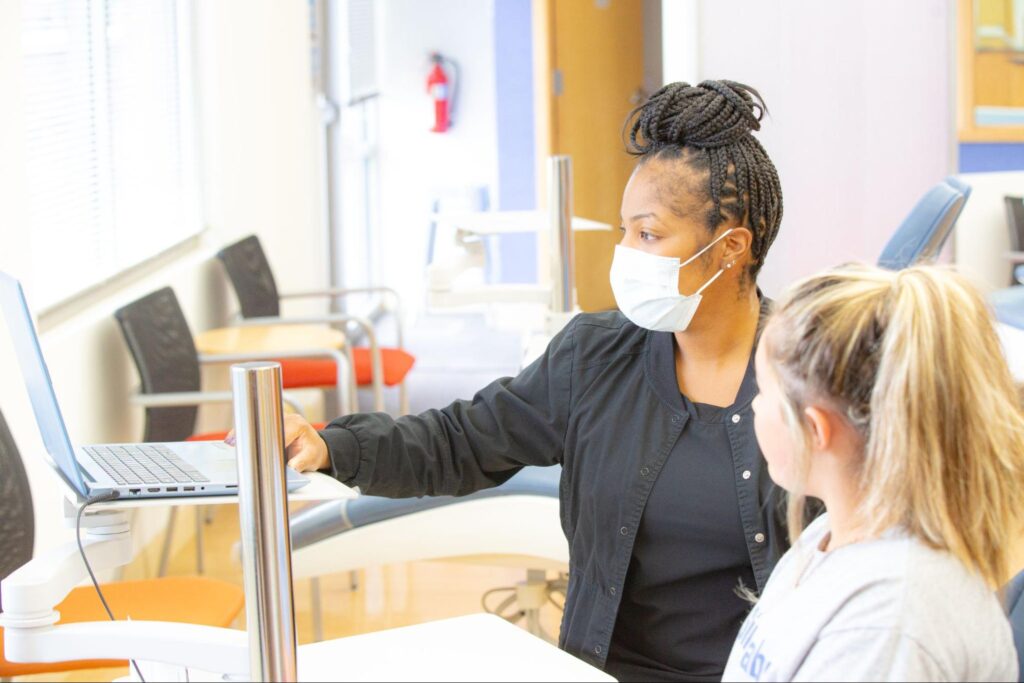
Most patients today are good candidates for digital scanning. A few situations still call for a traditional mold.
Digital scanning is usually the better choice for:
- Clear aligner patients, since aligners are designed from digital files anyway
- Anyone with a strong gag reflex
- Kids and teens who struggle to sit still through set time
- Retainer remakes and replacements
- Patients wearing metal braces or clear ceramic braces, since brackets and wires don’t need to come off
- Patients with implants, crowns, or bridgework
- Anxious or sensory-sensitive patients who need the option to pause
Traditional molds may be used when:
- A lab specifically requires a physical model for an appliance
- Certain soft-tissue details need to be captured
- Equipment access or case specifics make a mold the practical choice
Special circumstances matter too. Limited mouth opening, heavy saliva flow, or a very pronounced gag reflex all factor into which method your orthodontist recommends. A scanner handles most of these better than putty does, but not always.
Ultimately, Dr. Joe Moon makes the call based on your appliance, your case complexity, and your comfort. He brings 11 years of higher education and training to that decision, including a dental degree from the University of Pennsylvania School of Dental Medicine and a background as both a general dentist and an orthodontist. He’s also a member of the American Association of Orthodontists and the Kansas Association of Orthodontists.
If something about the process makes you uneasy, say so. We care about your care, and there’s almost always a way to make it easier. Every smile revolution starts with clean, accurate records, and getting them should never feel like the hard part.
Frequently Asked Questions
Does a digital scan hurt?
No. A digital scan is touch-free apart from a small cheek retractor that holds your lips out of the way. The wand hovers over your teeth without pressing on them, and there’s no material to bite into or wait on. Most patients describe it as mildly ticklish at worst.
How long does a digital scan take?
A full-mouth digital scan usually takes about three to ten minutes, including the upper arch, lower arch, and bite. Time varies a bit depending on how much movement or saliva the scanner has to work around. You can take breaks between arches whenever you need one.
Are digital scans more accurate than traditional molds?
For most orthodontic uses, digital scans are comparable to or better than putty impressions. Scanners avoid the distortion that can occur when impression material shifts during removal or when a plaster model dries unevenly. Traditional molds still perform well and remain a reliable option for certain appliances.
Can I be scanned with braces on?
Yes. Brackets and wires don’t prevent a digital scan, and nothing has to be removed first. This is a real advantage over putty, which can catch on hardware during removal. Scanning with braces on is routine during progress checks and when planning the next phase of your treatment.
Is a digital scan safe?
Digital scanners use safe optical light to capture images, not X-ray exposure. That’s different from the X-ray your orthodontist takes, which is a separate part of your records. Scanning carries no exposure concern at all, so it can be repeated as often as your case calls for, at every stage of treatment.
Can a digital scan be used for a replacement retainer?
Yes, and this is one of the biggest long-term benefits. Because your scan file is stored digitally, a lab can produce a replacement retainer from that record without bringing you back for a whole new impression. Lost or cracked retainers become much less of a headache.