
Choosing the Right Orthodontist for Braces: A Complete Guide
Choosing the right orthodontist for braces means finding a dental specialist who completed two to three years of residency training after dental school, offers the appliance options your case needs, and communicates in a way you trust. Credentials, technology, and treatment philosophy all matter, because braces usually take 12 to 24 months.
What Does Choosing the Right Orthodontist Actually Mean?
Start with the basics: every orthodontist is a dentist, but not every dentist is an orthodontist. General dentists earn a dental degree and may take continuing education courses in tooth movement. Orthodontists complete that same dental degree, then add a full specialty residency focused only on moving teeth, guiding jaw growth, and correcting bites.
What makes one “right” for you? It comes down to four things:
- Credentials you can verify
- Technology that makes visits faster and more accurate
- Treatment philosophy that fits your goals and timeline
- Communication style that answers your questions honestly
You’ll see this person every four to eight weeks for a year or more. Your child might see them through braces, retainers, and a growth spurt or two. The relationship matters as much as the brackets.

How to Evaluate an Orthodontist for Braces: A Step-by-Step Process
Evaluating an orthodontist takes five steps: verify specialty credentials, review the appliance options offered, read patient reviews for patterns, attend a free consult, then compare written plans and financing side by side. Most families can do this in a week or two, and many consults are free.
Step 1: Verify specialty credentials.
Look for completion of an accredited orthodontic residency and membership in the American Association of Orthodontists (AAO). Dr. Joe Moon is a member of both the AAO and the Kansas Association of Orthodontists. He graduated from the University of Pennsylvania School of Dental Medicine and spent 11 years in higher education and training, including time practicing as a general dentist before specializing.
Step 2: Review the appliance options offered.
A practice that only offers one thing will recommend one thing. Ask about metal braces, clear ceramic braces, clear aligners, and early treatment appliances for younger kids.
Step 3: Read reviews and look for patterns.
Skip the outliers. Look for repeated comments about comfort, wait times, running on schedule, and whether the team explains things clearly.
Step 4: Attend a consult.
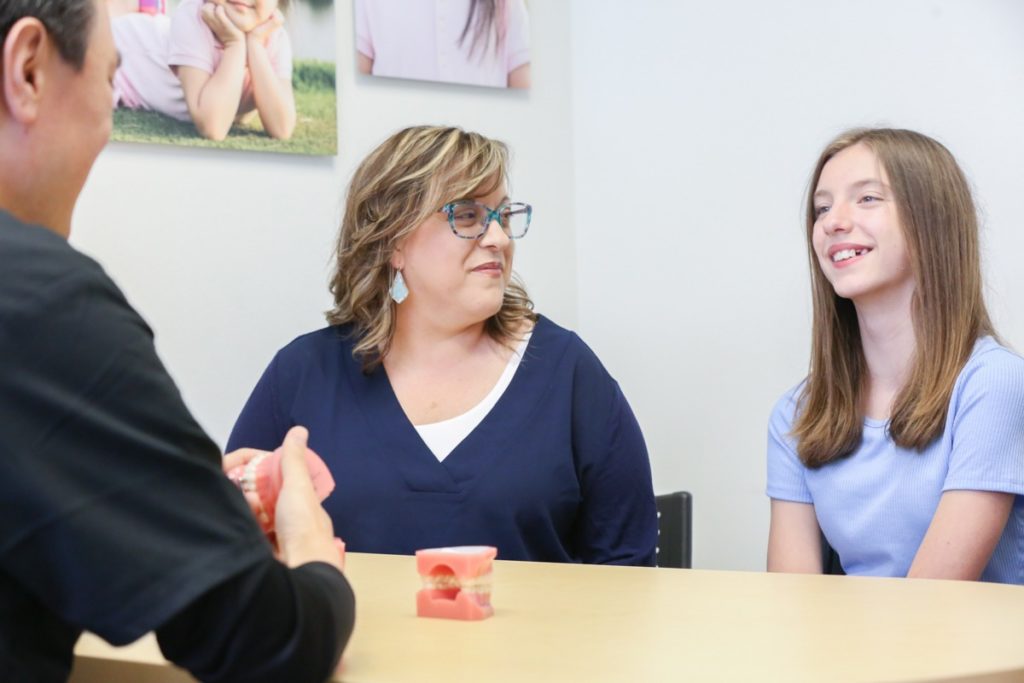
Moon Orthodontics offers a free consult at both offices, plus a virtual consult option if you’d rather start from your couch. A real evaluation should include digital X-rays, digital photos, and a no-goop digital scan before anyone quotes you a price.
Step 5: Compare plans in writing.
Get the estimated timeline, the appliance recommended, and what’s included. Then compare apples to apples.
Benefits of Choosing an Experienced Orthodontic Specialist
Choosing an experienced orthodontic specialist matters because specialty training changes what gets noticed, what gets recommended, and what holds after the brackets come off. A specialist diagnoses the whole bite rather than just the front teeth, and plans around growth, timing, and retention from day one. Here’s what that looks like in practice.
What Does Specialty Training Actually Change?
Specialty training shows up in the details, especially in cases that aren’t straightforward.
- Sharper diagnosis. Specialists evaluate the bigger picture: bite relationships, jaw growth, airway concerns, and how teeth meet when you chew, not just how they look from the front.
- A plan built around the patient, not the inventory. When a practice offers metal braces, clear ceramic braces, and clear aligners, the recommendation comes from your anatomy and lifestyle rather than what’s on the shelf.
- Fewer surprises mid-treatment. Careful planning up front reduces refinements, do-overs, and timelines that quietly stretch an extra six months.
- Retention that holds. Finishing braces is only part of it. A specialist plans retainers based on your original bite, your age, and how much your teeth moved.
- Comfort for kids and teens. A seven-year-old needs a different conversation than a sixteen-year-old, and both should walk out feeling good about what comes next. Age-appropriate care matters more than most parents expect.
How Do Specialists Support Long-Term Results?
Straight teeth are easier to clean, which keeps tooth decay and gum disease at bay. Correcting a bite can also prevent tooth wear, headaches, jaw soreness, and trouble chewing or speaking clearly. That long view is why the friendly team at Moon Orthodontics builds retention into the plan from the first visit rather than treating it as an afterthought.
Orthodontist vs. General Dentist vs. Direct-to-Consumer Aligners
These three options are not interchangeable, even when the marketing makes them sound that way.
| Orthodontist | General Dentist | Mail-Order Aligners | |
|---|---|---|---|
| Training after dental school | 2-3 year accredited residency | Continuing education courses | None; no clinician exam |
| In-person visits | Regular, typically every 4-8 weeks | Varies by practice | None |
| Diagnostic records | Digital X-rays, digital photos, digital scan | Varies | Photos you take yourself |
| Appliance options | Metal braces, clear ceramic braces, clear aligners, early treatment | Often limited to one or two | One aligner system |
| Case complexity handled | Mild through complex | Typically mild | Minor crowding only |
| Oversight if teeth shift | Adjusted in office | In office | Remote, if at all |
When each makes sense. A general dentist you already trust may be a reasonable option for very mild crowding, especially if they refer out when a case grows beyond their scope. Mail-order aligners can appeal to adults with minor relapse after previous braces, though without X-rays no one can confirm that your roots and bone can handle the movement.
A specialist becomes the clear choice when there’s an overbite, underbite, crossbite, open bite, significant crowding, missing teeth, or any jaw growth concern. According to the American Association of Orthodontists, treatment should be supervised by a licensed orthodontist based on a full clinical exam and diagnostic records.
How to Compare Orthodontist Quotes and Treatment Plans
What you’re quoted depends on case complexity, treatment length, and the appliance recommended for your case, and it varies from patient to patient. That’s exactly why a detailed, written plan matters more than a ballpark number. Most practices also offer flexible monthly payment options to help treatment fit your family’s plans.
What affects your treatment plan:
| Factor | What It Affects |
|---|---|
| Case complexity | Bite correction and jaw guidance involve more steps than minor alignment |
| Treatment length | Longer plans mean more visits and materials |
| Appliance type | Metal braces, clear ceramic braces, and clear aligners each involve different materials and lab work |
| Retention | Some plans include retainers, others handle them as a separate step |
| Records and imaging | May be included with your other records or handled separately |
Ask every practice these questions:
- Does the treatment plan clearly spell out what’s included, like records, adjustments, retainers, and emergency visits?
- Do you file my insurance directly, and how do you handle orthodontic lifetime maximums?
- Can I use FSA or HSA funds for treatment?
- Are interest-free monthly payment plans available?
One warning sign is worth repeating. If someone gives you a treatment estimate before reviewing X-rays and diagnostic records, that estimate isn’t based on your actual case. Moon Orthodontics offers financing options to help treatment fit into your family’s plans.
Who Is a Good Candidate for Braces?
Braces work for most people with healthy teeth, gums, and supporting bone. Age isn’t the deciding factor.
Common reasons people start treatment:
- Crowding or teeth that overlap
- Gaps and spacing
- Overbite, underbite, or crossbite
- Open bite where front teeth don’t touch
- Midline shifts or teeth that don’t meet evenly
By age group:
- Children. Both Dr. Moon and the AAO recommend a first orthodontic evaluation around age seven. Most kids still have baby teeth then, which is exactly the point. At Moon Orthodontics, early treatment screening lets us monitor growth and step in at the right moment instead of too late.
- Teens. Once most permanent teeth have come in, the timing is ideal. Jaws are still growing, which works in our favor.
- Adults. Teeth keep shifting throughout life. Adults get excellent results, and clear aligners or clear ceramic braces keep treatment discreet at work.
Before you start, cavities should be treated, gums should be healthy, and you’ll need to commit to brushing well and keeping appointments. That’s the honest list.
The best way to judge any orthodontist is to sit in the chair and ask questions. Dr. Joe Moon and our friendly team will walk you through your options, show you the bigger picture with digital X-rays and a no-goop digital scan, and give you a customized treatment plan in writing. Our family-friendly offices welcome children, teens, and adults, so you can schedule your free consultation, in person or virtually, and get a smile you’ll love to the moon and back.

Frequently Asked Questions About Choosing an Orthodontist
How do I know if an orthodontist is board certified?
Board certification through the American Board of Orthodontics is voluntary and separate from licensure. You can ask the practice directly or check the ABO’s public directory. Also confirm the orthodontist completed an accredited residency and belongs to professional groups like the AAO or a state association such as the Kansas Association of Orthodontists.
Is it worth getting a second orthodontic opinion?
Often, yes. Two specialists may recommend different appliances or timelines for the same bite, and hearing both helps you understand the reasoning. Since many practices offer a free consult, a second opinion typically just takes an hour of your time. Bring your records or ask that they be shared.
How long do braces take, and can a different provider finish treatment?
Most cases run 12 to 24 months, though simple alignment can finish faster and bite correction can take longer. Another orthodontist can take over an unfinished case, but they’ll want new records and may adjust the plan. Transfers happen regularly, especially with military moves and job relocations.
What questions should I ask at a free consultation?
Ask what’s causing the issue, not just how it will be fixed. Then cover: which appliance options fit my case and why, how long will treatment take, what’s included in the plan, how often are visits, and who handles emergencies. Ask to see before & afters of cases similar to yours.
Do I need a dentist referral to see an orthodontist?
No. You can schedule directly with an orthodontist, and most patients do. Many dentists do refer, and a referral form makes record-sharing easier, but it isn’t required. Check your insurance plan, since a small number of plans request one.
Can I switch orthodontists mid-treatment?
Yes. Request your treatment records and let your current office know, then schedule a consult with the new practice. The new orthodontist will evaluate where things stand and let you know what the rest of treatment involves. Expect a short adjustment period as your new team gets familiar with your case.